
Ben & Jerry's: When ownership silences purpose
Nov 09, 2025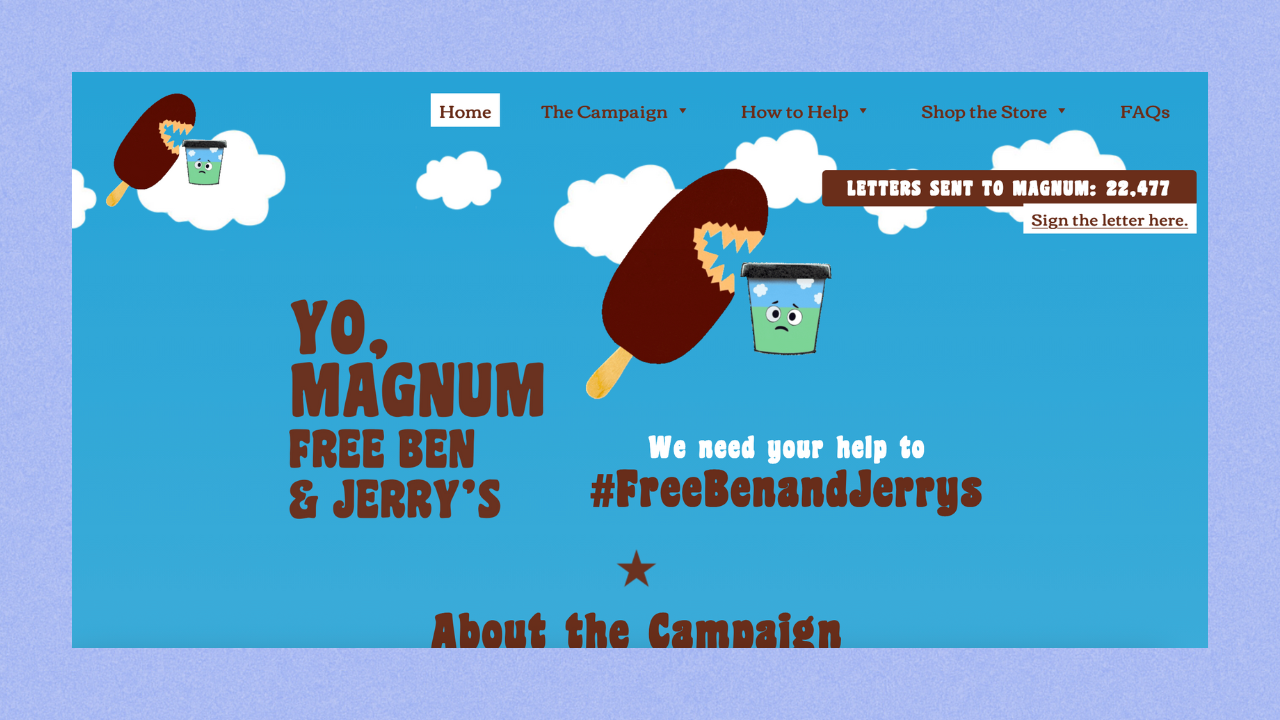
Ben & Jerry's: When ownership silences purpose
In a recent interview, Jerry Greenfield the co-founder Ben & Jerry’s said that their social mission has been “silenced” under Unilever’s ownership.
It is a familiar story. When an independent mission-driven company becomes part of a large corporation, priorities begin to shift. The ambition to change the world turns into the ambition to meet quarterly targets. What once felt like a movement slowly becomes yet a company in the portfolio.
This isn’t just the case for Ben & Jerry's. It illustrates the tension between ownership and purpose in general.
Ownership defines who ultimately makes decisions. And those decisions shape what kind of success becomes possible and what the business strives to achieve.
When control moves away from the people who work close to the product, the community, or the ecosystem, decisions start following another logic, often based on efficiency, predictability, and shareholder expectations.
From that moment, the mission is no longer protected. It becomes vulnerable to compromise.
The hidden cost of “scaling up”
Ben & Jerry’s is not an isolated case. Many organizations start with a clear purpose: to solve a problem or serve a need that feels both urgent and somewhat tangible. As they grow, their logic changes.
What disappears first are often the economies of small:
- Tangibility: The closeness between decision and context that ensures good judgment.
- Accountability: The sense of ownership and pride that comes from having influence and seeing one’s work matter.
- Flexibility: The capacity to adapt quickly to new realities rather than optimizing for predictability.
- Resilience: The ability to remain stable over time by staying within one’s natural limits and building buffers instead of chasing growth.
The push for efficiency, profit, and global reach tends to dilute the very advantages that made a smaller company strong in the first place. The closeness to community, accountability to people and the flexibility to adapt.
A different approach to scale
Instead of selling to grow, companies can find other ways to extend their impact without losing their soul.
They can replicate what works in new local contexts. Small, independent units connected by shared principles rather than controlled by a single center.
They can spread ideas, tools, and methods openly, enabling others to build upon them instead of guarding them as proprietary assets.
They can protect ownership, using structures that safeguard the mission from being traded away, such as steward-ownership or purpose trusts.
The lesson
The story of Ben & Jerry’s is a reminder that purpose and ownership are inseparable.
Once ownership leaves the hands of those committed to the mission, the mission can drift.
For companies that want to contribute to a radical green transition, the question is not only how to grow within limits, but how to remain in control in the process.
Want to learn more? Check The Edge Playbook
This theme of how limits, ownership, and design choices define the future of business is explored in our new eBook: The Edge Playbook: A Radical Playbook for leaders rethinking endless growth, success and ambition.
The book presents 10 strategies for owners, leaders, founders, and teams that want practical ideas from real-life cases, ready to question old assumptions about growth, ambition, and success and who wants to build companies that matter in the 21st century.
And, The Edge toolkit
The Edge Toolkit has 12 reflection frameworks and small experiments for each strategy in the book. It’s designed to help you apply the ideas in your company, team, or consultancy.
Inside the toolkit, you’ll find:
- 5+ reflection questions per strategy
- Practical “Try This” experiments
- Conversation starters to spark change at your work.
Think of it as a field guide to finding your company’s edge.